Book contents
. CONTENTS ( 144 pages)
. FOREWORD
1. HISTORY OF WATER POLO
1.1. Introduction
1.2. Stage development of the water polo games
1.3. European water polo club competitions
2. STRUCTURAL ANALYSIS OF WATER POLO
2.1. Introdution
2.2. Structure of movement in water polo
2.3. Energy structure of water polo.
2.4. Water polo rules
2.5. Positions and roles in water polo game
2.5.1. Goalkeeper
2.5.2. Wing player
2.5.3. Perimeter player
2.5.4. Centre-forward
2.5.5. Centre-defender
3. WATER POLO TECHNIQUES
3.1. Analysis of water polo playing techniques
3.2. Technique of basic types of movements in water polo
3.3. Technique of special types of movements in water polo
3.4. Ball handling technique
3.4.1. Technique of basic elements of ball handling
3.4.2. Technique of passing and shooting
3.5. Defence technique of field players
3.6. Goalkeeping technique
3.7. Wrestling technique in water polo
4. TACTICS OF WATER POLO
4.1. Introduction.
4.2. Analysis of the phases of the flow of the game
4.3. Phase of a set defense
4.4. Phase of transition from defense to offense / man up
4.5. Phase of a set offense
4.6. Phase of the transition from offense to defense/ man down
5. ANTHROPOLOGICAL ANALYSIS OF WATER POLO. FACTORS FOR SUCCESS IN WATER POLO
5.1. Introduction
5.2. Morphological and somatotype characteristics of water polo players:
Relation between morphological characteristics and athletic achievement of water polo players
5.3. Functional competences of water polo players
5.4. Motor capacities of water polo players
5.5. Conative-cognitive sphere and athletic achievement in water polo
5.6. Sociological features and models of water polo players
5.7. Technical and tactical characteristics and athletic achievement in water polo
. REFERENCES
. LIST OF IMAGES AND TABLES
. ACKNOWLEDGEMENT
. CV
Buy the book !

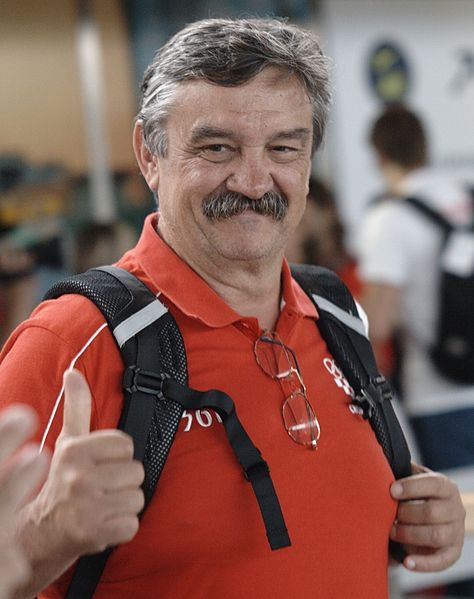
Ratko Rudić
the best and the most successful water polo coach of all time
Even though it is the oldest sport at the Olympic Games, water polo has not developed the relevant professional and scientific literature that would incorporate the needs of quality training programming and preparation of players and teams in water polo, not al-life situations that every coach can immediately apply, adapt or use to further examine certain topics for the purpose of better understanding the entire process of preparation and management of players and teams of various ages, categories and qualities. The structural analysis of water polo game, techniques, tactics and the creation of a functional model of the game according to the applicable rules and development trends of water polo lay the foundations of planning and further research. This book provides answers to most questions related to the game and strategic- tactical situations and raises new topics that the theoreticians and practitioners need to tackle. I whole-heartedly recommend the book by Assoc. Prof. Mladen Hraste to all fans of water polo and sports in general, and I genuinely believe that it will motivate the publication of other research papers, because without that our sport will continue to lag behind other sports.
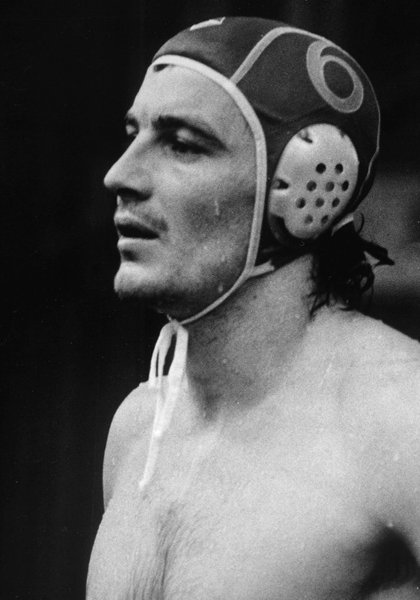
Milivoj Bebić
winner of gold and silver Olympic medals
Assoc. Prof. Mladen Hraste, PhD, incorporated his rich sports and scientific experience, expertise and knowledge of a long-term versatile athlete and top water polo player, and later a professor with a large number of published scientific and professional papers, into the book "Water Polo". The scope of the text is entirely adapted to the reader in terms of the comprehensibility of the text. The text is elaborated very professionally, which further substantiates the author's theoretical and practical knowledge. The title of the book fully corresponds to the content which, according to its scientific facts, attitudes, data and conclusions, is, unquestionably, very much current. The content of the book contributes to the development of water polo with its applicable content. By using understandable and standardised professional terminology, the author made the reading comprehensible, supported with illustrations that are very clear, well-arranged and understandable. The order of the chapters is ingeniously arranged so that all the parts fit into a homogeneous whole. It covered all the developmental stages of water polo, from the historical overview, through the gradual development of the game to the structural analyses that are described in detail. The book provides a fascinating detailed description of the positions of players in water polo and their role in the game, in all positions from goalkeeper, centre-defender, wing players, perimeter player and centre-forward. All segments of water polo techniques and tactics, individual, group and collective, are covered. All of this can be a valuable contribution to water polo coaches of all age groups, including seniors. It is really interesting how much of water polo as a whole the author covered, without ultimately complicating the understanding of the matter. Another valuable fact is that the book is well-structured. It can be read successfully even if you skip a chapter. The reader can concentrate on what seems interesting to them or what they are unfamiliar with in a professional sense. Some topics are intriguing, especially in the segment of water polo rules and their impact on the development of the game. Water polo is played in water as a challenging natural environment. Water is a limiting factor for the speed of movement, even if we neglect the opponent. Therefore, as the author himself states, the rules were changed very often in order to improve the speed and appeal of the game. All this accompanied and particularly influenced the gradual development of techniques and tactics in water polo players. Among other things, the book describes, in a special and picturesque way, the techniques of special ways of moving in water polo, which was not an easy task for the author. There is also a detailed section which addresses the technique of ball manipulation, and special attention is paid to the anthropological analysis of water polo and success factors. The range and selection of used scientific literature by domestic and foreign authors is fascinating, which gives the book additional quality and credibility. There is never enough professional literature, especially sport-related literature. Sport is changing and developing very fast nowadays, especially in cooperation with scientific institutions. From this aspect, the book of Assoc. Prof. Mladen Hraste will greatly benefit a large number of water polo coaches and water polo professionals because it is based on the author's extensive knowledge and experience and on scientifically proven facts.
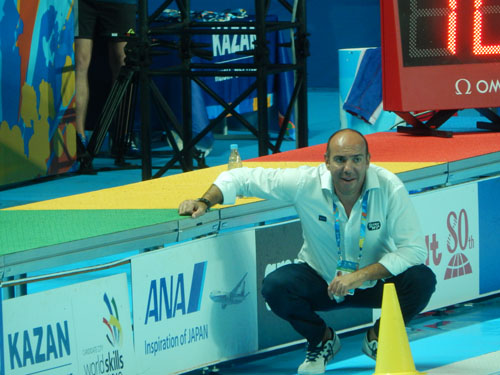
Ivica Tucak
winner of a silver Olympic medal and four medals from world championships
The book Water Polo is a significant contribution to water polo both in Croatia and on the global scene. It provides a comprehensive analysis of water polo by presenting water polo through different segments. The author summarised the development of water polo throughout history, following the development of water polo rules, the gradual development of the game itself through changes in rules, players` roles and technical-tactical requirements, presenting the logistics of these changes through a series of major competitions from the late 19th century to the present day. In the next part, he presents an analysis of the structural characteristics of water polo, a brief overview of the structures of movement, the energy structure of the game, an overview of current rules and playing positions. In this segment, the author analyses the game tasks in relation to the segments of the game, concisely summarizing the characteristics of quality performance and the most common mistakes in the game with and without the ball. A detailed description of water polo technique, from the basics to special movements and ball manipulation techniques in relation to biomechanical economy and functional efficiency, brings a clear and logical overview of the components of water polo performance, which is illustrated by photographs. All of this can be a useful contribution to field coaches, especially in the younger age categories when it is necessary to lay a good foundation for the water polo game and create the preconditions for later specialisation and advancement. An interesting addition is the analysis of wrestling techniques that can be used for training and development of contact play, which is a kind of innovation in the segment of dry training that is subsequently upgraded by water work. Within the tactical analysis of the water polo game, the author provides a detailed elaboration of the phases of defence and attack and the phase of transition, describing the logistics and parameters of the dominant tactical formations of modern water polo. Finally, the profile of a successful water polo player is presented from the aspect of somatotype, cognitive, conative and sociological characteristics in the function of technical-tactical playing performance, which can be seen as a reference framework for the development of young players. I am firmly convinced that this book, which provides a quality and comprehensive overview of water polo, will significantly contribute to the knowledge base and professional texts on water polo and thus help coaches in their professional development in Croatia and beyond, and that it will certainly be an interesting global read due to the Croatian water polo and its world-wide achievements.

Igor Milanović
a double Olympic champion and double world champion
I read this wonderful book in one take. I believe that no one has ever described the water polo game so systematically, thoroughly and accurately. The book largely surpasses my knowledge of sports, which only shows how much I enjoyed it, on the one hand, and how much it enriched me, on the other hand, and educated me as a professional in sport and a coach. Congratulations to my colleague Assoc. Prof. Mladen Hraste, PhD, because this book has improved us all.
Deni Lušić
winner of two Olympic gold medals and one gold medal from the World Championships
This is the best sports-themed book I have read in my whole life, and it is presented in such a way that even a layman can understand the game of water polo. It systematically presents the water polo game in a very simple way. The book is written so that each previous unit builds on the next, and the totality of the book covers a large area of water polo. Water polo technique and tactics are so systematically analysed that every coach and player can expand and deepen their knowledge of the water polo game. I am especially impressed by the analysis of wrestling techniques in water polo. I recommend this book to all coaches of all sports, from those who have just entered the world of coaching to the experienced professionals.
Perica Bukić
Vice President and Executive Director of the Croatian Water Polo Federation, winner of two Olympic gold medals and one gold medal from the World Championships
We can approach water polo or any other sport and talk about this wonderful game through several dimensions – from the player`s perspective that implies the innate talent perfected by many years of hard work, through the tactical-pedagogical perspective inherent to coaches, to the fan perspective driven by emotions and passion. Our teammate Mladen Hraste has managed to take it one dimension further. In this book, the author not only incorporated all the above approaches, but he also upgraded and enriched them with a scientific approach. The author was greatly influenced by a personal empirical method, straight from the pool gameplay, in the theoretical analysis of some of the basic settings of the game and the professional, kinesiological approach to the methods of preparation for training and the training itself. The experience of Mladen Hraste, who successfully passed all playing stages including the premier senior division in five countries, and then the coaching stage where he coached the First Croatian League teams, gives an additional value to his observations. This is not merely a professional and academic approach, but it is specifically grounded in immediate practice. There will never be enough sports books, monographs or similar sports texts published in Croatia, especially those including professional and scientific approach. Water polo as a sport lacks such literature not only in Croatia, but in Europe and the entire world as well, which makes "Water Polo" by Assoc. Prof. Mladen Hraste, PhD, even more significant. The author has managed to achieve a perfect balance between profession and practice. In fact, all of us who live water polo on daily basis and who could talk about it all day long will certainly find answers, novelties, broadened horizons, reputable expertise and understanding of the subject in this book. People who come to water polo matches out of sheer love for the sport, individual or team, and who primarily perceive water polo as a source of great entertainment, will not perceive the book as too scientifically abstract or too technical and incomprehensible, instead it will bring them even closer to their beloved sport in perfectly balanced doses. It will introduce them to some details or data they were previously unfamiliar with. Achieving such a balance among readers is one of the most difficult tasks of any author, so in this regard, Mladen Hraste has definitely succeeded. I personally enjoyed every line and every new page of this book. In fact, I am convinced that I will gladly reach for the book “Water Polo” by Assoc. Prof. Mladen Hraste, PhD, more than once in search of some answers or verifications of my own hypotheses.